

Pollution Prevention
Relevant SDGs
We identify potential environmental risks, including environmental pollution due to improper management of chemicals, and strive to prevent pollution.
Basic Approach
Many chemical substances pose risks such as environmental pollution and injury due to improper handling or equipment failure. To avoid and mitigate these risks, it is necessary to establish systems for the correct and safe management of chemical substances.
Our Group is committed to reducing our environmental impact. We use a wide variety of chemical substances, and we recognize the importance of reducing the total amount of those chemicals and also substituting safer alternatives. Each operating company within our Group has established chemical substance management systems to reduce risks and lessen environmental impact. We constantly conduct chemical substance management education, emergency response training for leaks, daily inspections and internal audits to confirm correct operations, and training of qualified personnel. We also promote the reduction of chemical usage by sharing information on alternative substances as well as other methods to reduce usage.
Summary of Fiscal Year 2024
We strive to minimize the use of chemical substances as much as possible. In fiscal 2024, the total amount of substances we handled that were subject to the PRTR Law* reached approximately 80 tons, an increase of about 23 tons compared to the previous year.
The main reasons for this increase were the revision of the PRTR Law, which expanded the list of regulated substances, and increased production volumes.
Our Group companies that use chemicals continuously conducted chemical management education and emergency response training. In 2024, based on the annual environmental activity plan, we conducted education, training, and on-site inspections to reduce risks.
※1 PRTR (Pollutant Release and Transfer Register: Chemical Substance Release and Transfer Reporting System) - A system for understanding, aggregating, and disclosing the handling volume, environmental release, and amount of chemical substances moved outside the facility as waste, among other aspects. Companies are required to compile data for substances covered by this system and report it to government authorities annually.
Chemical Substance Management Education
Within our group, we have established specialized courses on chemical substance management as part of our environmental education program. These courses cover a wide range of topics, including the characteristics and risks associated with chemical substances, relevant regulations, and key points in practical management.
Additionally, we have developed procedures and manuals for handling emergency situations, such as chemical leaks, and have regularly conducted emergency response training based on these procedures. This not only ensures the effectiveness of what is written in the manuals, but also enables practical learning of methods to prevent the spread of contamination.
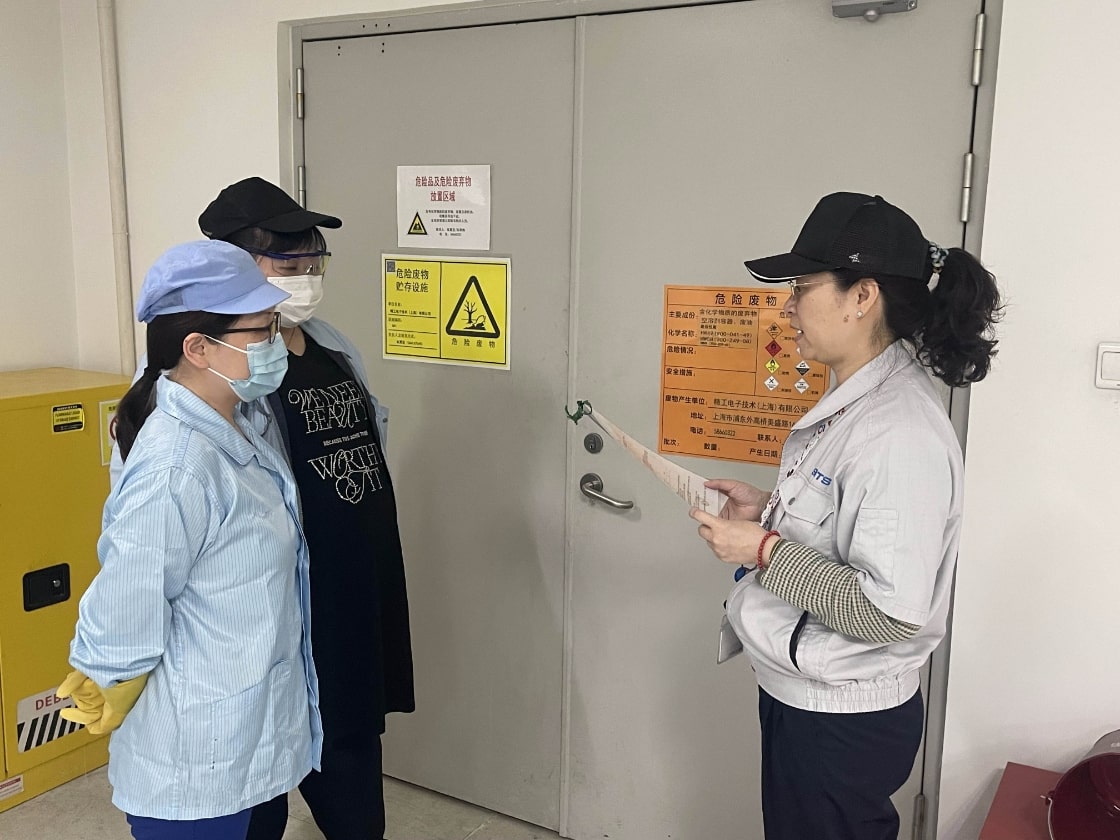
Chemical Substance Leak Response Training (Seiko Instruments Technology (Shanghai) Inc.)
Management of Chemical Substances in Products
The strengthening of product-related chemical regulations stemming from the EU's RoHS directive is expanding globally. Within our Group, we are not only committed to eliminating substances that are prohibited by regulations, but also eliminating or severely reducing those that pose concerns about harming human health and the environment.
Business units involved in product manufacturing have all established management systems, working towards the elimination of such substances through aggressive initiatives and regular confirmation analyses. Additionally, different environmental regulations may require different types of labels. Depending on the country or region, labeling requirements for substances, means of disposal, and other information may vary. Business units handling relevant products ensure that labeling is done in accordance with the relevant requirements.