


Climate Change
Relevant SDGs

To help achieve a decarbonized society, we have set long-term environmental targets, and are working to reduce greenhouse gas (GHG) emissions across all business activities at all our worldwide operations.
Basic Approach
As the business risks associated with climate change, such as the increasing frequency of natural disasters, continue to rise, the role and responsibility of companies in achieving a "decarbonized society" are becoming increasingly significant.
Our Group’s policies are based on several climate change agreements, including the Paris Agreement, and Japan's net-zero policy. We report to the Government on energy usage, progress towards energy-reduction goals, and greenhouse gas emissions, in accordance with national climate change regulations such as the Energy Efficiency Act (Act on Rationalizing Energy use and Shifting to Non-fossil Energy), and the Act on Promotion of Global Warming Countermeasures.
Our Group is committed to reducing greenhouse gas emissions as part of the Sustainability strategy outlined in our 8th Medium-Term Management Plan, called "SMILE145," which includes initiatives for climate change and decarbonization.
Our efforts to reduce GHG emissions focus on energy-saving activities that target both CO₂ and other greenhouse gases, the introduction of renewable energy, and emissions reductions across the value chain. Additionally, we emphasize creating energy-efficient products and services by including power consumption as one of our environmental considerations.
In terms of energy-saving activities, we promote efficient operation and management of all equipment, and we are updating many units to high-efficiency models. We are also continuing to pursue everyday energy-saving activities, believing that these efforts need to be continuous in order to be truly effective. There are various types of renewable energy, and we believe it is essential to adopt the optimal method according to the location and characteristics of each business site. We intend to promote reductions across the value chain together with our suppliers and other stakeholders.
Long-term target
In November 2023, the Group revised its long-term target to reduce greenhouse gas emissions ahead of schedule. In terms of electricity supply, we aim to achieve 100% renewable energy at all our sites, both domestic and overseas, by the end of fiscal 2040. We plan to offset residual emissions from energy conservation, fuel conversion, and Scope 3 reductions by introducing elimination credits.
In line with this long-term goal, we will continue to accelerate our adoption of renewable energy and make efforts to further reduce greenhouse gas emissions. Regarding our targets for fiscal year 2030, we have obtained certification from the Science Based Targets initiative (SBTi), confirming that our targets align with the 1.5°C target set out in the Paris Agreement.
Our long-term targets for reducing greenhouse gas emissions
Greenhouse gas emissions reduction target
Fiscal year 2030
Scope1、242% reduction compared to the FY2022 level.
Scope325% reduction compared to the FY2022 level, targeting categories 1 and 11.
Fiscal year 2050
Aiming for net zero.
Summary of Fiscal Year 2024
In fiscal 2024, we focused on energy-saving initiatives such as the transition to LED lighting, as well as switching to electricity derived from renewable sources, including self-generation, off-site PPAs, and renewable energy plans. As a result, we achieved virtually 100% renewable energy usage across all our domestic sites.
Thanks to these efforts, our Scope 1 and Scope 2 greenhouse gas (GHG) emissions totaled 55,150 t-CO₂, representing a 31.0% reduction compared to the previous fiscal year, and a 42.9% reduction compared to FY2022, which is the base year for our long-term targets. This reduction significantly exceeds our long-term goal of a 10.5% reduction from FY2022.
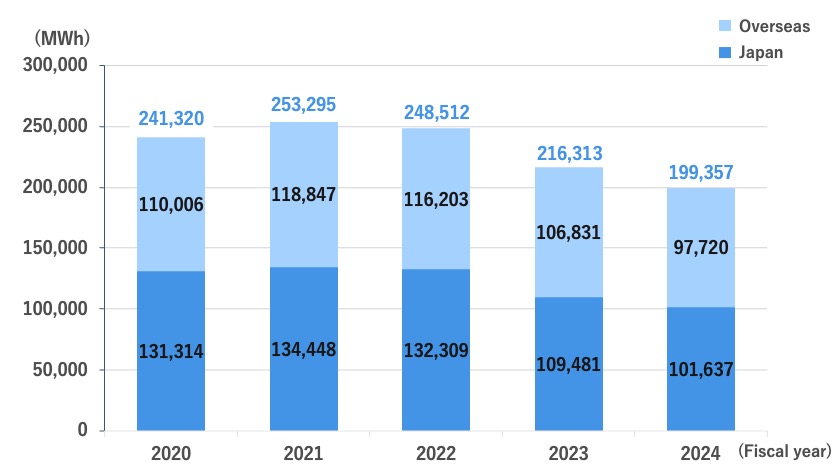
The renewable energy ratio for total electricity used by our worldwide Group reached 49.2%.
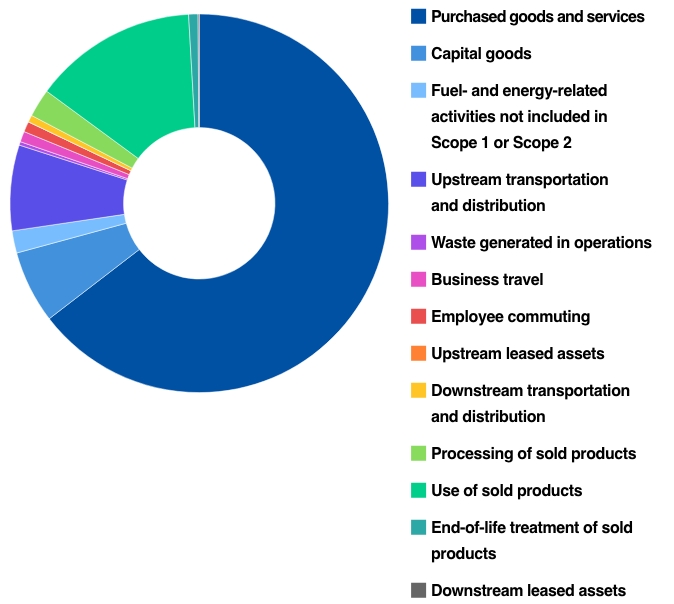
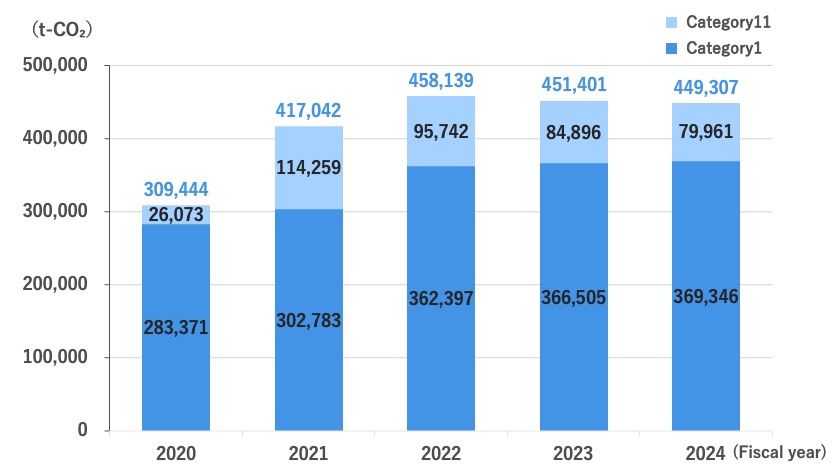
Scope 3 GHG emissions amounted to 572,503 t-CO₂, with Category 1 (Purchased goods and services) accounting for 64.5%, and Category 11 (Use of sold products) accounting for 14.0%. Categories 1 and 11 are included within the scope of the Group’s emissions reduction targets. We achieved a slight reduction compared with the fiscal 2022 baseline. While Category 1 emissions increased due to higher sales, Category 11 emissions decreased thanks to a higher proportion of low-power-consumption products.
Scope1, 2 Greenhouse Gas (GHG) Emissions
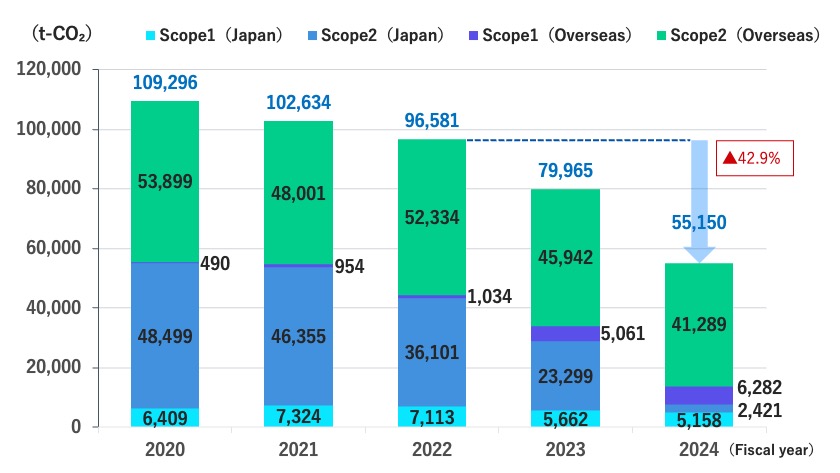
- Scope1: Direct emissions by the reporting company (e.g., fuel combustion)
- Scope2: Indirect emissions from the generation of purchased electricity and other energy
- ■Scope of Data Aggregation:
These two Scopes include Seiko Group Corporation and all its Group companies, both domestic and international, including tenants, retail stores, warehouses, and other facilities. - ●Scope1: Includes greenhouse gas emissions other than CO₂. There are no emissions classified as biogenic.
- ・For both Japan and overseas, emissions from fuel are calculated using the calorific values and emission factors of each fuel, and those of non-CO₂ greenhouse gases are calculated using the global warming potential (GWP) of each gas type. Those values and factors are listed in the “Calculation, Reporting, and Publication System” under Japan’s Act on Promotion of Global Warming Countermeasures.
- ・Scope 1 includes fuel usage by company vehicles, but does not include energy usage by subcontractors.
- ●Scope2: Market-based approach
- ・For electricity related emissions: For operations in Japan, adjusted emission factors are applied in accordance with the aforementioned Act on Promotion of Global Warming Countermeasures, using the published factors for each electric utility.
- ・For operations outside Japan, where utility-specific emission factors are not available, country-level factors published by the International Energy Agency (IEA) are applied.
- ・For locations such as retail outlets or warehouses where electricity usage cannot be directly identified, consumption is estimated based on floor area and emission intensity per unit of area.
- ・The impact of renewable energy certificates and other environmental value instruments is also reflected in the calculations.
- ●For overseas sites prior to FY2022, only energy-related CO₂ emissions are included.
- ●Scope 1 and Scope 2 data from FY2022 onward have undergone third-party verification by an external verification body.
As a result, previously published figures may be revised.
Note: Due to rounding, totals may not match the sum of individual components.
Scope3 Greenhouse Gas (GHG) Emissions
Emissions in fiscal year 2024
| Category | Item | GHG emissions (t-CO₂) |
% |
|---|---|---|---|
| Category 1 | Purchased goods and services | 369,346 | 64.5% |
| Category 2 | Capital goods | 35,373 | 6.2% |
| Category 3 | Fuel- and energy-related activities not included in Scope 1 or Scope 2 | 11,074 | 1.9% |
| Category 4 | Upstream transportation and distribution | 41,938 | 7.3% |
| Category 5 | Waste generated in operations | 1,676 | 0.3% |
| Category 6 | Business travel | 5,188 | 0.9% |
| Category 7 | Employee commuting | 5,048 | 0.9% |
| Category 8 | Upstream leased assets | 123 | 0.0% |
| Category 9 | Downstream transportation and distribution | 3,692 | 0.6% |
| Category 10 | Processing of sold products | 13,777 | 2.4% |
| Category 11 | Use of sold products | 79,961 | 14.0% |
| Category 12 | End-of-life treatment of sold products | 4,826 | 0.8% |
| Category 13 | Downstream leased assets | 482 | 0.1% |
| Category 14 | Franchises | - | - |
| Category 15 | Investments | - | - |
| total | 572,503 | 100.0% | |
- ■Scope of Data Aggregation
The scope includes Seiko Group Corporation and all domestic and international Group companies. (Note: In FY2020, only selected Group companies were included.) - ●Emission factors
For both domestic and international operations, emission factors are based on the Emission Factor Database (Ver. 3.5) and the LCI Database IDEA (Ver. 2.3), used for calculating greenhouse gas emissions through the supply chain. - ●Third-party verification
Scope 3 data (Categories 1, 4, and 11) from FY2022 onward have undergone third-party verification by an external verification body. As a result, previously published figures may be subject to revision.
●Rounding
Due to rounding, total values may not match the sum of individual components.
Emissions from Categories 1 and 11
●Rounding
Due to rounding, total values may not match the sum of individual components.
Energy Usage
■Scope of Aggregation
Includes Seiko Group Corporation and all Group companies worldwide, including tenants, retail stores, and warehouses
●Due to rounding, totals may not equal the sum of component parts
Eliminating Ozone-Depleting Substances
Our Group has completely eliminated the use of ozone-depleting substances in our manufacturing processes worldwide. We are also actively transitioning to refrigerants with zero ozone depletion potential (ODP) for use in our air conditioning and refrigeration equipment. We recognize that these refrigerants are greenhouse gases (GHGs) with global warming potential. Our Group is continuously working to reduce emissions of fluorocarbons and other GHGs.
In Japan, we comply with the Act on Rational Use and Proper Management of Fluorocarbons, while overseas, in addition to abiding by all local regulations, we make every effort to prevent leakage during use and ensure proper disposal.
*The Act on Rational Use and Proper Management of Fluorocarbons: A Japanese law that mandates inspection, record-keeping, and recovery of fluorocarbons from commercial refrigeration and air conditioning equipment in order to protect the ozone layer and prevent global warming.
Introduction of Renewable Energy
Our Group is actively working to employ electric power derived from 100% renewable sources. We are installing solar panels, adopting on-site/off-site Power Purchase Agreements (PPAs), and switching to renewable energy contracts.
For example, Seiko NPC Corporation. installed solar panels on the rooftop of its main building, and began solar power generation in November 2024. The system has a capacity of 844.8 kW and is expected to generate approximately 916,000 kWh annually— more than 10% of Seiko NPC’s total annual consumption of electricity.
Through the use of renewable energy, we aim to steadily reduce the environmental impact of our business operations.
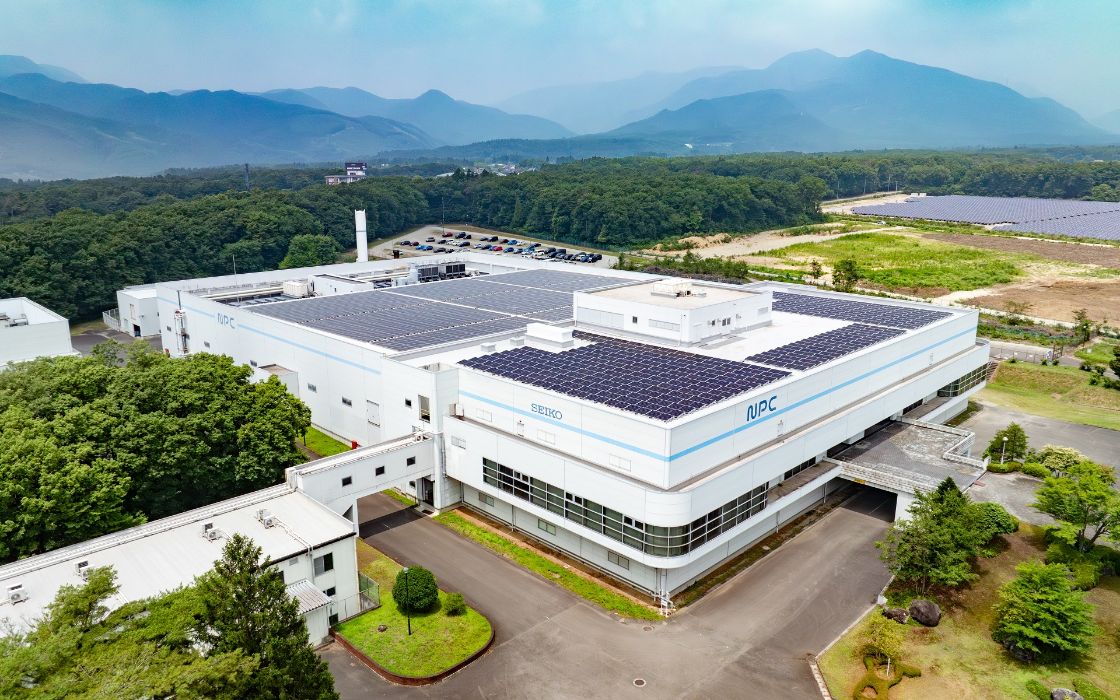
Seiko NPC Corporation
Seiko Manufacturing (Singapore) Pte. Ltd. has installed over 2,000 solar panels on the roof of its building. The system produced approximately 1.41 million kWh in fiscal year 2024, accounting for approximately 11% of the company’s total electricity consumption.
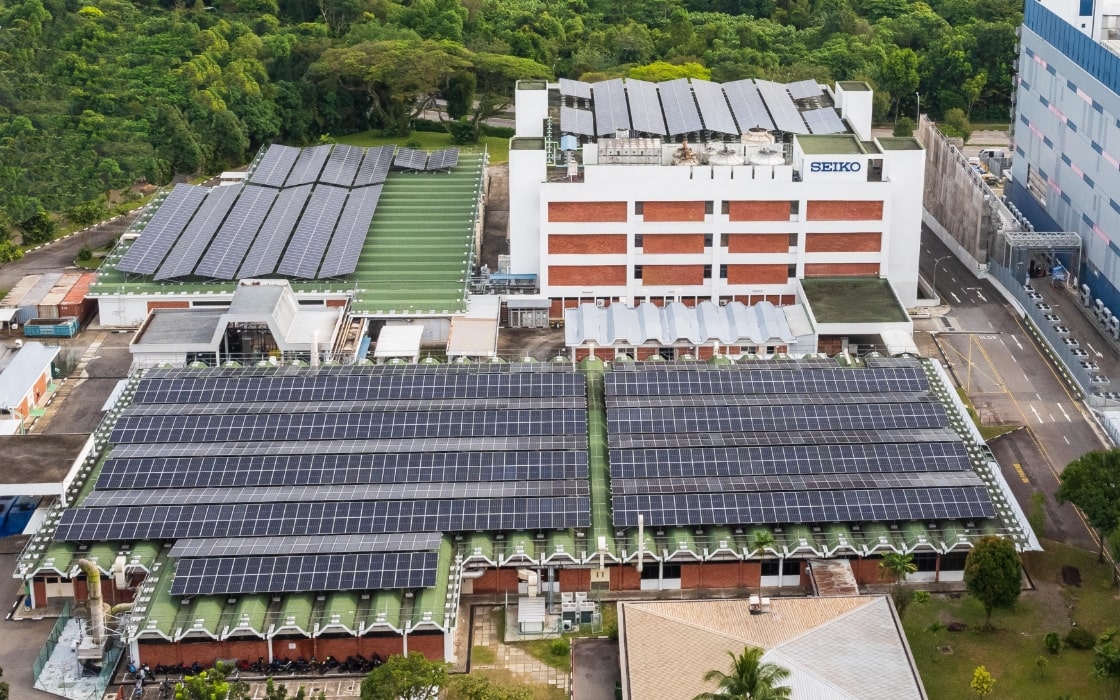
Seiko Manufacturing (Singapore) Pte. Ltd.
At Seiko Precision (Thailand) Co., Ltd., solar panels were installed on the roofs of the buildings, and the solar power generation systems started operation in January 2023 for the first factory and in August 2023 for the second factory. The system capacity is 723.2 kW for the first factory and 869.4 kW for the second factory.
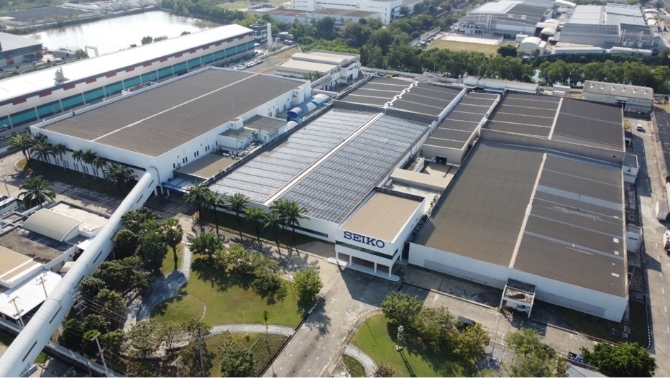
Seiko Precision (Thailand) Co.,Ltd
Seiko Instruments (Thailand) Ltd. has the highest GHG emissions of any Group company. Solar power systems began operation at the Navanakorn plant in June 2021, and at the Gateway plant in February 2023.
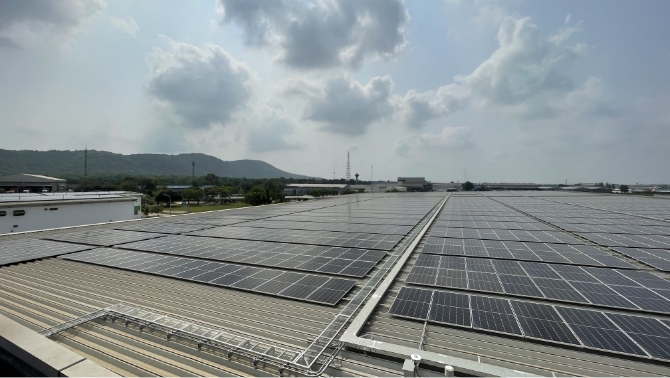
Seiko Instruments(Thailand)Ltd.