


The Adjuster: Persona
Balancing Time While Reading the Room — A Modern “Balancer”
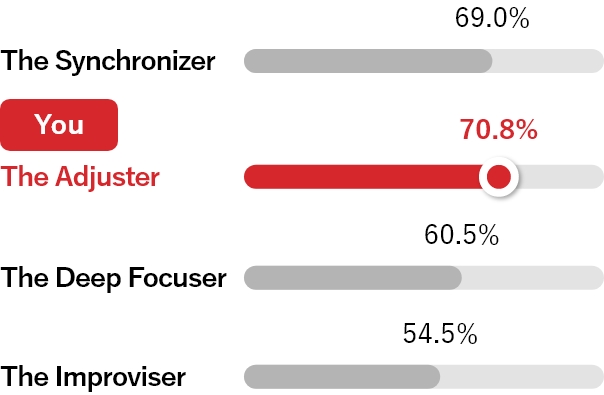
Adjusters view time as something flexible and needing to be adjusted in order to maintain comfortable relationships with others. They seek to increase time spent with others, and so, feel a general sense of loss, as shared time has decreased in recent years.
At the same time, they prioritize making personally satisfying choices and consciously switch between efficient (Taipa) and inefficient (Menpa) time.
Adjusters exhibit a well-balanced sense of time, carefully managing both shared time with others and personal time.
*1 Taipa (Time Performance): Defined in this survey as the effectiveness of time usage in daily life. It encompasses not only time-saving and efficiency, but also ways of spending time that respondents themselves perceive as enriching.
*2 Menpa (Mental Performance): A performance metric following cost performance and time performance, focusing on reducing psychological burden and prioritizing emotional stability, human connections, and overall life satisfaction. In this survey, “Menpa” is defined as a time value that emphasizes mental fulfillment, a sense of satisfaction, and connections with others.
The Adjuster: Key Traits
Source: Seiko Time White Paper 2026 Survey (Respondents: 1,400 men and women aged 16–69)
Believe using time well involves feeling connected to others
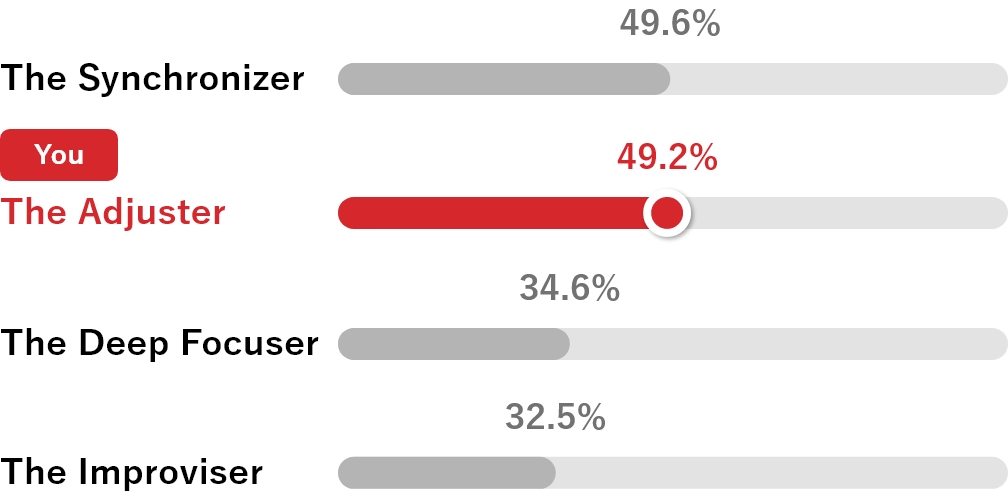
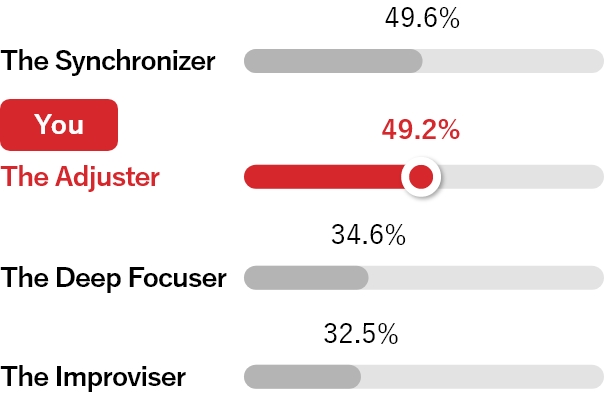
Feel a sense of loss because time with others has decreased
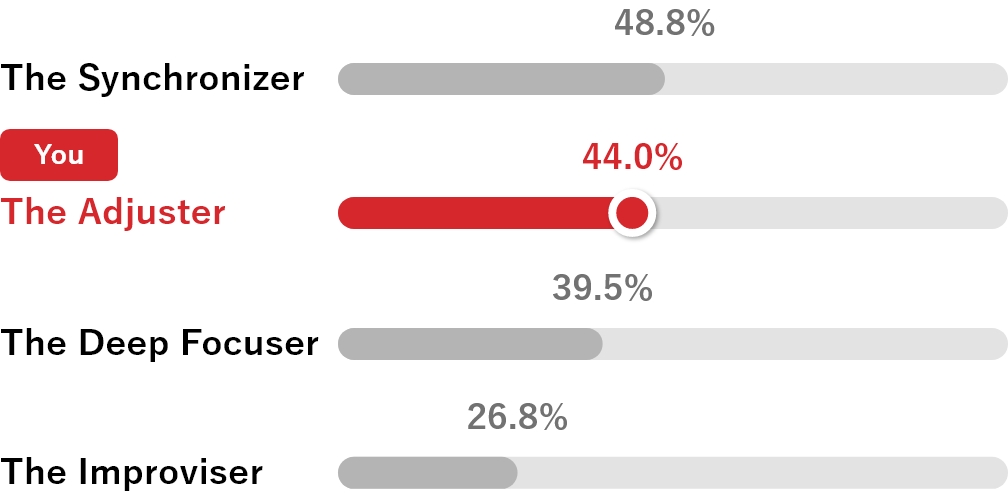
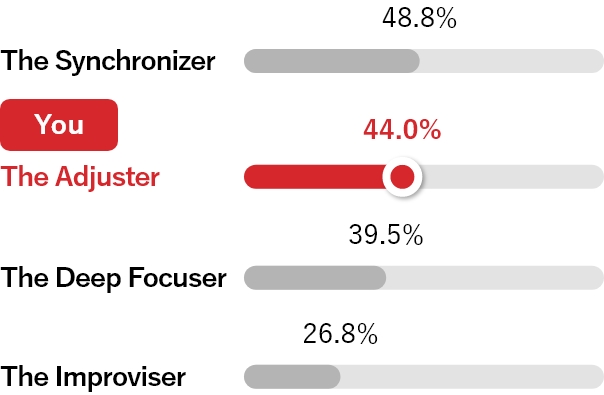
Prefer making satisfying choices even if it takes longer
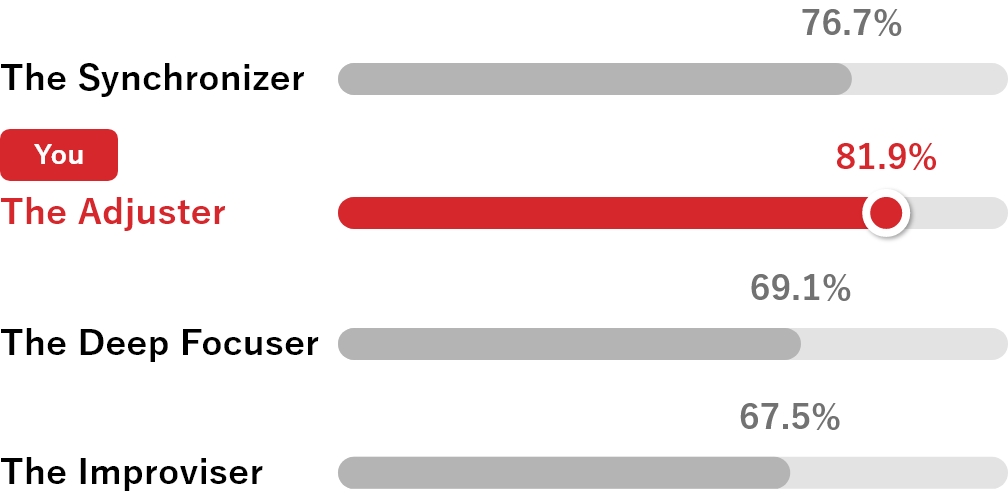
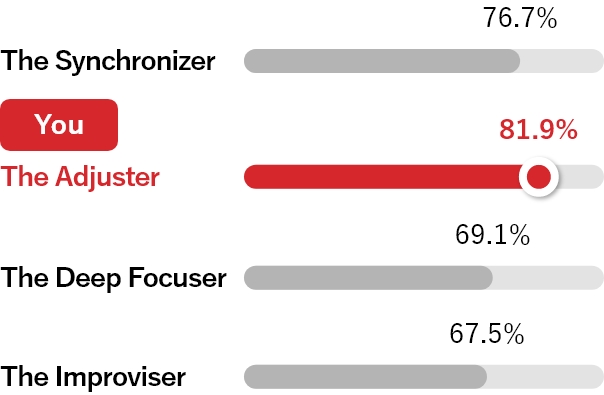
Consciously switch between efficient and non-efficient time
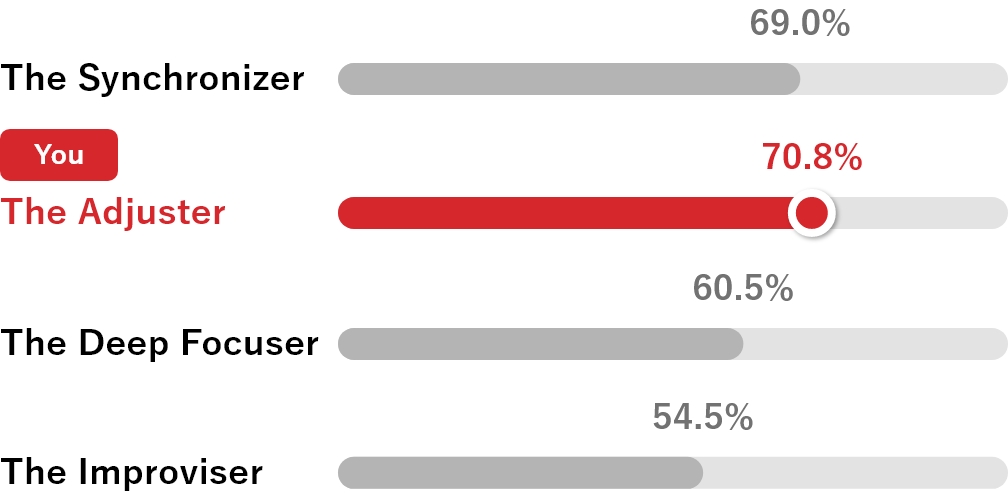
Supervised by Makoto Ichikawa Professor, Graduate School of Humanities, Chiba University
Chronotype Test

A chronotype refers to an individual characteristic observed in the body’s natural 24-hour rhythm.
People are often categorized as morning types or evening types.
What Is Your Body Clock?
Start by identifying your own chronotype. It may offer insights into achieving a more comfortable daily rhythm.
Pick Up Contents
Explore more of Seiko’s initiatives