

What Is a Chronotype?

A chronotype refers to an individual characteristic observed in the body’s natural 24-hour rhythm.
People are often categorized as morning types or evening types.
Since chronotype is believed to be innate, it cannot easily be changed through lifestyle habits or personal effort.
Each year, Seiko Group publishes the Seiko Time White Paper, presenting research findings on time in modern society.
In the Seiko Time White Paper 2024, a simplified survey was used to assess respondents’ chronotypes (morning, In-Between, evening) and compare them with their actual daily rhythms.
The results showed that 18.9% of respondents had a mismatch between their chronotype and their lifestyle.
Start by identifying your own chronotype. It may offer insights into achieving a more comfortable daily rhythm.
Five Chronotype Types
Extreme Morning Type
People with an Extreme Morning chronotype naturally wake up very early when free to choose their schedule.
They are particularly focused during the first 1 to 5 hours after waking.
Morning Type
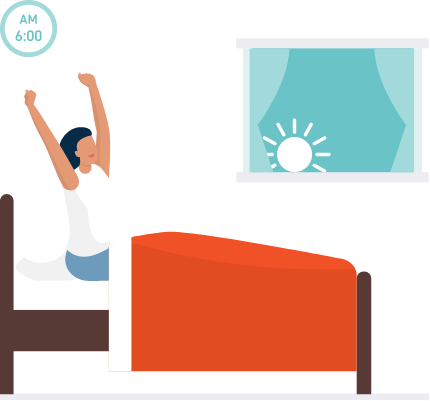
Morning types tend to wake up by around 7:00 AM when free to choose their schedules.
They achieve peak focus between around 8:00 AM and noon.

In-Between Type
In-Between Types typically wake up by around 8:00 AM when free to choose their schedules.
They are most focused for a 3–4 hour period from late morning to early afternoon.
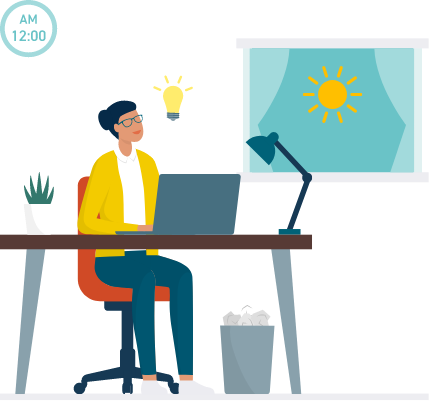
Evening Type
Evening types tend to wake up by around 9:00 AM when free to choose their schedules.
They may find it difficult to concentrate on tasks that require focus early in the morning.
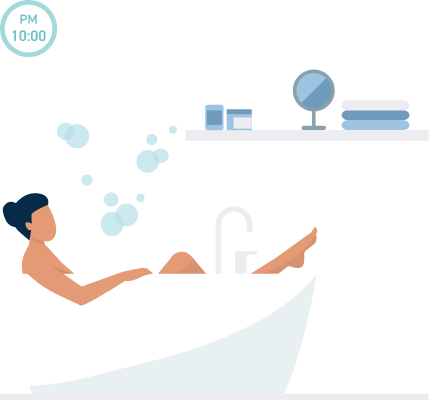
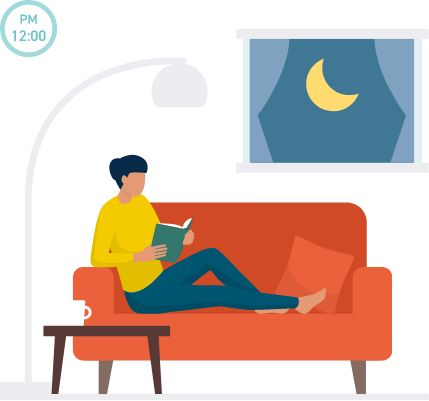
Extreme Evening Type
Extreme Evening Types tend to wake up later in the morning when free to choose their schedule.
They may find it especially difficult to focus on tasks in the morning.
The diagnostic content on the Website was developed based on the study “Survey Results Using the Japanese Version of the Morningness-Eveningness Questionnaire” by Kaneyoshi Ishihara, Akio Miyashita, Maki Inugami, Kazuhiko Fukuda, Katsuo Yamazaki, and Hiroshi Miyata (Japanese Journal of Psychology, Vol. 57, No. 2, 1986, pp. 87–91), under the supervision of Professor Makoto Ichikawa of the Graduate School of Humanities at Chiba University.
Time-sense type test

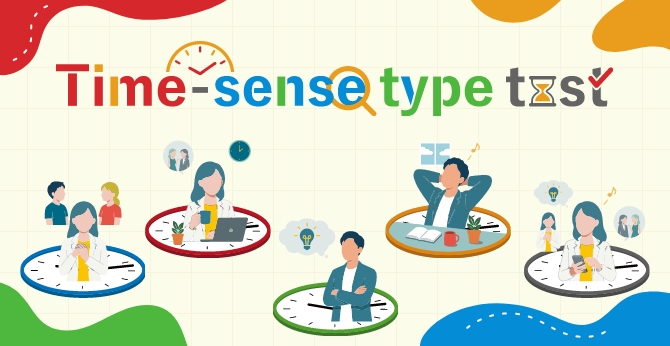
No two people experience time the same way. Answer six questions to find your own time-sense type.
We classify people into four types along two axes: who time belongs to and how they want to use it.
Based on two axes—who time is attributed to and how people want to use it—
people are classified into four types:
The Synchronizer, The Adjuster, The Deep Focuser, and The Improviser,
as well as a fifth category, The Hybrid, for those who are not confined to a single type.
Pick Up Contents
Explore more of Seiko’s initiatives