
Result
Your chronotype is…
In-Between Type
In-Between Types tend to wake up by around 8:00 AM. They are most focused during a 3–4 hour period from late morning to early afternoon. They may find the early morning challenging, with both physical and mental activity being relatively low. Sleepiness typically occurs around midnight.
This type accounts for approximately 40% of the population.
Advice from Professor Ichikawa
(Expert in time studies)

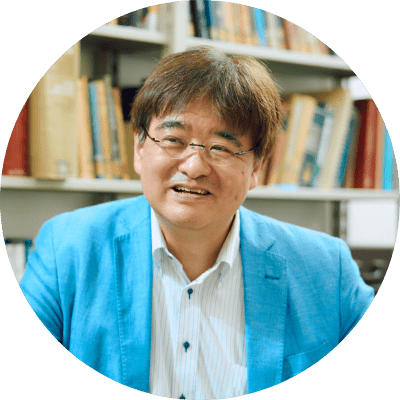
Schedule focus tasks from late morning to evening
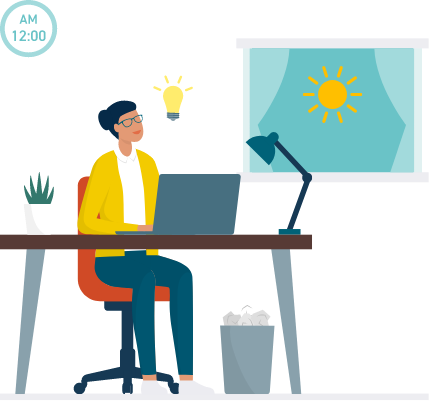
People with an In-Between chronotype often find it difficult to wake up early in the morning. Many rely on an alarm clock to get up at an early hour. Even after waking, they often find that both their bodies and minds are not functioning optimally.
During this time, it is best to avoid intense physical exercise or concentration-intensive work. Instead, it is best to schedule such activities for the late morning or from the afternoon into the evening.
These types are also likely to feel sleepy late at night.
Recommended Daily Schedule
Morning
Morning
Focus on desk work that relies on mental effort, avoid physical activity
In general, In-Between Type Types are not well suited to early-morning productive activities. If these activities cut into morning sleep time, it is better to avoid them. Since the human metabolism is still at a relatively low level in the morning, this period is better suited to easy desk work (e.g., reading or organizing materials) rather than physical exertion. It is not a good time for business conversations or discussions that require clear mental focus.

Afternoon
Afternoon
Focus on collaborative and physical tasks
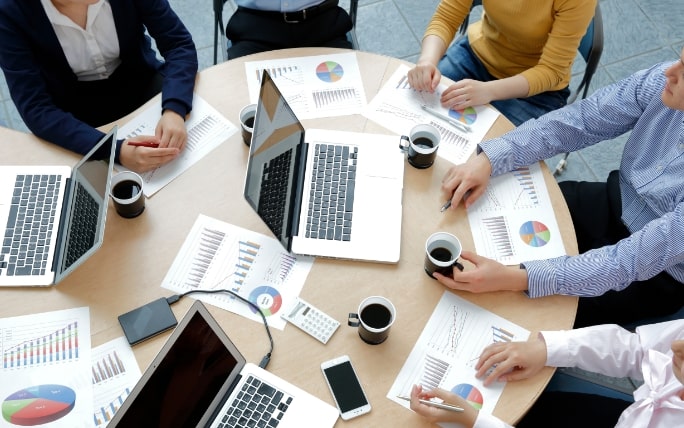
Because metabolism gradually increases from late morning to early afternoon, this time is suitable for meetings and collaborative work.
Physical performance tends to peak in the afternoon. Tasks involving physical movement can be carried out efficiently during this period.
Short-term memory performance also improves during this time. Tasks such as following detailed instructions or engaging in discussions that require active communication are handled well during this time.
*Working memory refers to the amount of information that can be held and processed simultaneously by the brain.
Tips
Tips
If you feel sleepy, take a short nap
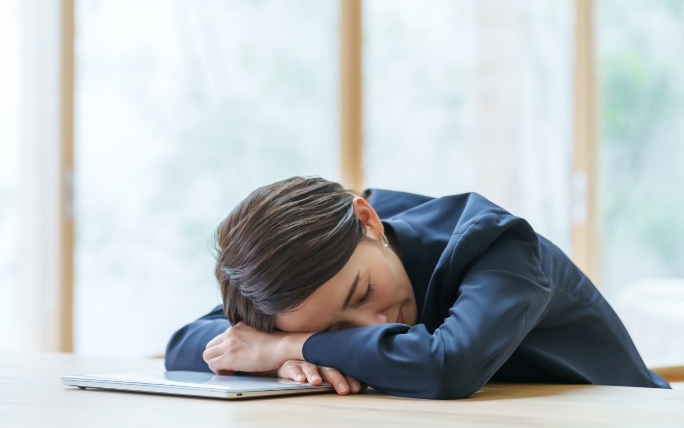
After lunch, concentration may temporarily decline. If you feel drowsy, take a brief rest.
A short nap of up to about 20 minutes can help restore alertness and improve efficiency. However, naps longer than 30 minutes during the day may affect nighttime sleep quality.
Before bedtime
Before bedtime
Relax and avoid blue light
As evening approaches, metabolism decreases, and both physical and mental activity slow down. In-Between Types often feel sleepy late at night.
When you experience drowsiness or fatigue, both mental and physical performance are likely to decline. Therefore, if you feel even slightly sleepy, it is best to stop working, go to sleep, and continue your work the following day. Going to bed earlier and getting a good night’s sleep will ensure greater energy to tackle the next day’s tasks.
Avoid using smartphones before bed, as blue light can interfere with falling asleep. Reading non-digital media can help prepare you for sleep.

Maintain a consistent sleep cycle
Maintain a consistent sleep cycle
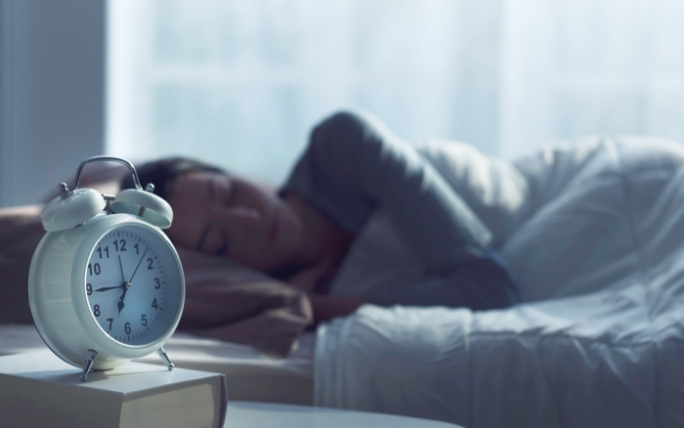
During sleep, information learned throughout the day is processed and organized. At the same time, the body releases hormones that support physical recovery. To support these processes, ensure sufficient sleep duration and maintain a stable bedtime routine.
Supervised by Makoto Ichikawa Professor, Graduate School of Humanities, Chiba University
Time-sense type test

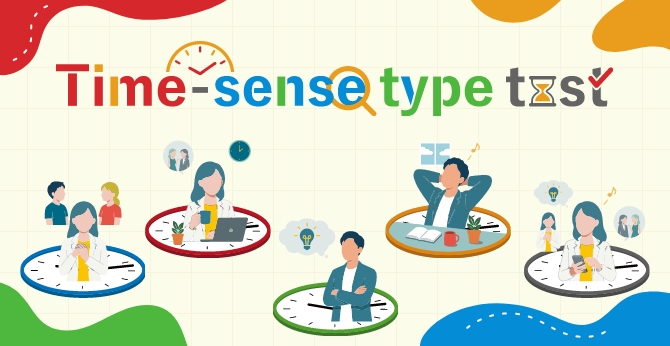
No two people experience time the same way. Answer six questions to find your own time-sense type.
We classify people into four types along two axes: who time belongs to and how they want to use it.
Based on two axes—who time is attributed to and how people want to use it—
people are classified into four types:
The Synchronizer, The Adjuster, The Deep Focuser, and The Improviser,
as well as a fifth category, The Hybrid, for those who are not confined to a single type.
Pick Up Contents
Explore more of Seiko’s initiatives